Can I Patent My Idea in the UK? What You Need to Know Before Applying

Yes, it is possible to patent an idea in the UK, but there are specific requirements and a detailed process to follow before an idea is eligible for patent protection. This blog explains what anyone considering patenting their idea in the UK needs to know before applying, covering key eligibility rules, steps to apply, common mistakes, and the difference between patents and design rights.
Understanding Patents vs. Design Patents in the UK
In the UK, the term “patent” refers specifically to a legal right protecting technical inventions—new products, processes, or ways of doing things—not simply ideas or mere concepts. Design protection is different; it covers the appearance of a product (like shape or decoration) rather than how it works. If the focus is functionality or technology, patent protection is the goal. For unique aesthetic appearances, a registered design right (sometimes informally called a “design patent”) may be more appropriate.
Can You Patent an Idea in the UK?
Strictly speaking, you cannot patent an “idea” alone in the UK. Patent law requires a clearly defined invention: something that can be made or used and which solves a technical problem. To be patentable, an invention must meet three main criteria:
-
Novelty: The invention must be completely new and never made public anywhere in the world.
-
Inventive Step: It must not be obvious to someone skilled in that field.
-
Industrial Applicability: The invention must be capable of being made or used in some kind of industry.
This means you need more than a vague concept. You need enough technical detail—like how it works and how it’s different—to show it’s a workable invention.
What is Not Patentable?
Not all ideas and creations are eligible for UK patents. Ethics and technical criteria exclude some categories, such as:
-
Discoveries, scientific theories, or mathematical methods
-
Aesthetic creations, artistic works, or purely intellectual activities
-
Schemes for performing mental acts, playing games, or doing business
-
Computer programs “as such” (unless they have a unique technical effect)
If what you have is a product’s unique appearance (shape, lines, texture), registered design protection is an alternative.
Before Applying: Research and Confidentiality
Before making an application, important preparation steps include:
-
Check for novelty: Do a thorough search in the UK Intellectual Property Office (IPO) and global patent databases. Ensure that your invention hasn’t already been disclosed, patented, or sold. Failing to check can waste time and money.
-
Confidentiality: Do not share your invention publicly before submitting your application. Public disclosure (even to potential investors) can destroy its novelty and make it ineligible for patenting. Use Non-Disclosure Agreements (NDAs) if you need to discuss it with partners or developers.
How to Apply for a UK Patent: The Process
Once confident your invention is new and meets the criteria, you can begin the application process:
-
Prepare Your Documentation
-
A detailed description (specification) of how the invention works.
-
Drawings or diagrams that clearly illustrate your invention.
-
Claims that precisely define what your patent covers (the legal boundaries).
-
An abstract summarizing the invention.
-
Complete the official application form (Form 1).
-
-
File the Application
-
Applications can be made online or by mail to the UK IPO.
-
Fees apply for filing, search, and substantive examination. The basic application starts around £60–£75, with further costs for the search and examination stages.
-
-
Examination Process
-
Formal Examination: Ensures all required documents are present and formatted correctly.
-
Search: The IPO performs a search to check for existing similar inventions.
-
Substantive Examination: The IPO assesses novelty, inventive step, and industrial applicability.
-
Respond to any official questions or objections to clarify or amend your application.
-
-
Publication and Grant
-
The application is published 18 months after the filing date.
-
If approved after examination, the patent is granted and you pay a grant fee.
-
Annual renewal fees are required to keep the patent in force.
-
How Long and How Much Does It Take?
The process can take several years from initial filing to final grant, depending on the complexity of the invention and whether objections need to be resolved. Costs start at a few hundred pounds for basic fees but can run to thousands with professional help and for international protection.
Common Mistakes to Avoid
-
Inadequate search: Not checking if the idea already exists.
-
Incomplete description: The invention must be described in enough detail for others to replicate it.
-
Incorrect inventorship: All contributors must be correctly identified.
-
Lack of legal advice: Patent law is complex. Engaging a patent attorney can greatly increase your success rate.
-
Delaying application: The UK follows a “first-to-file” rule—delays may cost patent rights.
-
Missing deadlines or maintenance fees: Forgetting these can cause loss of protection.
Difference Between Patents and Design Rights
| Criteria | UK Patent | Registered Design Right |
|---|---|---|
| What it protects | Technical invention/functional ideas | Appearance of a product (shape, look) |
| Duration | Up to 20 years, renewed annually | Up to 25 years (renewed every 5 years) |
| Automatic? | No, must apply and be granted | Some design right is automatic |
| Main requirements | New, inventive, industrially useful | New and unique appearance |
| Examples | Engine mechanism, new device | Bottle shape, phone design, logos |
Fast-Track and Specialist Services
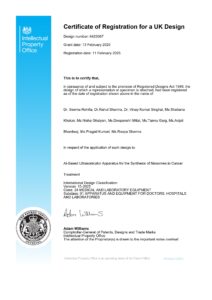
Some providers, like Lexgin, offer support for ideation, design creation, and filing for UK design patents or registered designs with a targeted turnaround (e.g., grant within a month, 100% success claim for complete applications).
Final Tips
-
Always consider whether patenting is the right strategy; sometimes design registration or trade secrets may be more effective.
-
Filing for patent protection early and professionally can safeguard future revenue and market position.
-
Consult with specialists to strengthen claims and navigate the legal landscape.
Patenting an “idea” in the UK means transforming a concept into a clearly defined, practical, and novel invention. Understanding and following the legal process is essential for protection and commercial success.