7 Types of Intellectual Property Rights (IPR) in India – Explained With Examples


The challenge isn’t knowing that IP protection exists. It’s knowing which type applies to what you’ve created, and what paperwork you’ll need to get it done. This guide breaks down all seven types with the governing laws, protection duration, required documents, and real Indian examples for each.
All 7 IPR Types at a Glance
Before getting into the details, here’s a comparison of all seven types. This table gives you the quick version. The deep breakdowns follow below.
| IPR Type | Governing Law | Duration | Registration Authority | Registration Required? |
|---|---|---|---|---|
| Patent | Patents Act, 1970 | 20 years | Indian Patent Office | Yes (mandatory) |
| Trademark | Trade Marks Act, 1999 | 10 years (renewable) | Trade Marks Registry | Recommended |
| Copyright | Copyright Act, 1957 | Lifetime + 60 years | Copyright Office, New Delhi | Optional but advisable |
| Industrial Design | Designs Act, 2000 | 10 + 5 years | Patent Office (Design Wing) | Yes (mandatory) |
| Geographical Indication | GI of Goods Act, 1999 | 10 years (renewable) | GI Registry, Chennai | Yes (mandatory) |
| Trade Secret | Contract Act, 1872 + Common Law | Unlimited | No registration | No (contractual) |
| Plant Variety | PPV&FR Act, 2001 | 15-18 years | PPV&FR Authority | Yes (mandatory) |
Now let’s go through each one properly.
Type 1
Patents
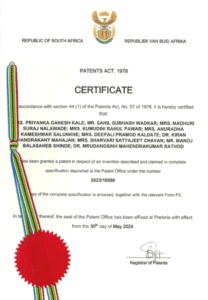
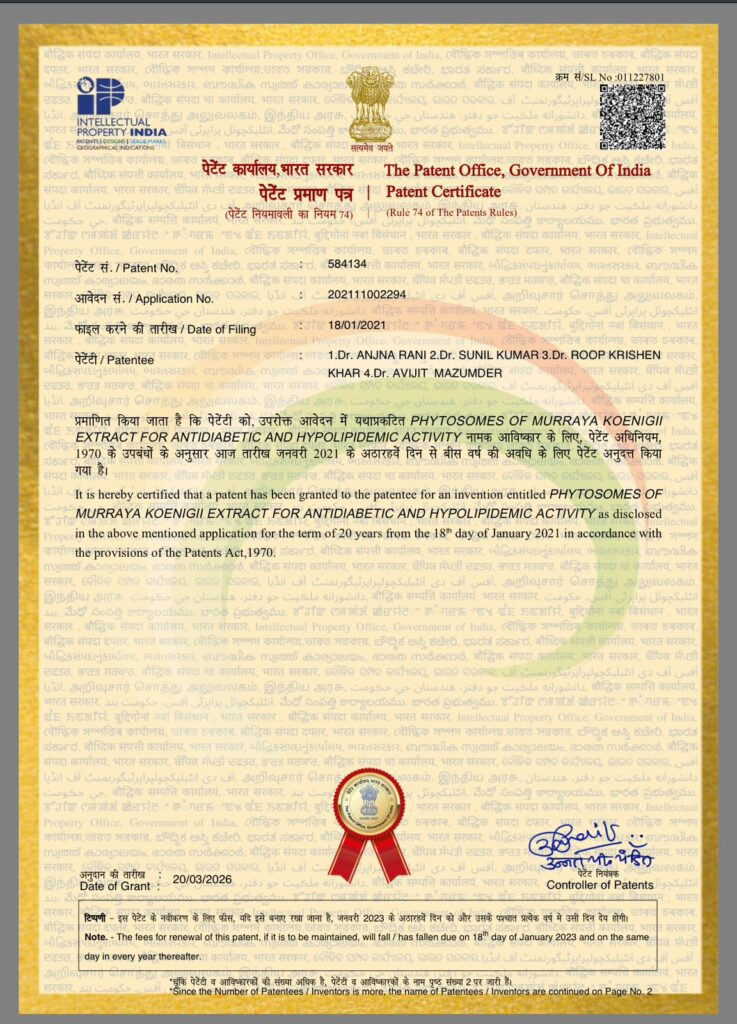
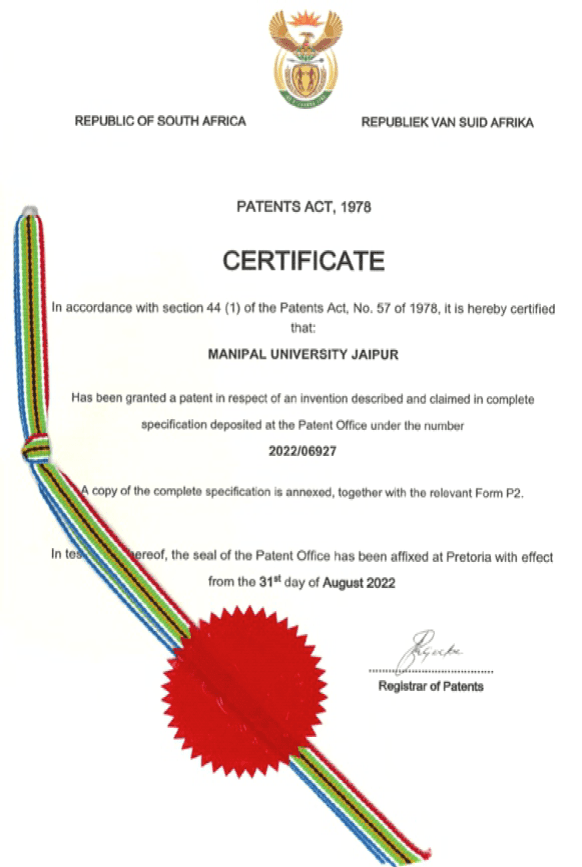
A patent gives you the exclusive right to make, use, sell, and license your invention for 20 years from the date of filing. In return, you disclose the invention publicly so that others can learn from it after the patent term ends.
The catch? Your invention must be new, involve an inventive step (it can’t be obvious to someone skilled in the field), and be capable of industrial application. Software per se, mathematical methods, business methods, and discoveries of natural substances are excluded from patentability under Section 3 of the Act.
Documents required:
- Form 1 (Application for Grant of Patent)
- Form 2 (Complete or Provisional Specification with claims, abstract, drawings)
- Form 3 (Statement of Foreign Filing, if applicable)
- Form 5 (Declaration of Inventorship)
- Form 26 (Power of Attorney, if filing through agent)
- Form 28 (Startup/Small Entity declaration for reduced fees)
Indian example:
CSIR’s turmeric patent (US 5,401,504) defence
Biocon’s biosimilar drug patents
IIT Madras – solar desalination patents
India’s most famous patent story is arguably CSIR’s challenge to the US turmeric patent in 1997. The Council of Scientific and Industrial Research proved that turmeric’s wound-healing properties were traditional knowledge, not a novel invention. The patent was revoked. It set a global precedent for protecting traditional knowledge from biopiracy.
Type 2
Trademarks
A trademark protects the signs that distinguish your goods or services from everyone else’s. This includes word marks (brand names), device marks (logos), composite marks, shape marks, sound marks, colour marks, and even smell marks. India accepted its first smell trademark in November 2025.
Registration isn’t mandatory for trademark protection (common law rights exist through use), but registration gives you statutory rights, the ability to use the ® symbol, and much stronger legal standing in disputes. You can keep renewing a trademark forever, which is why brands like Tata and Amul have had continuous protection for decades.
Documents required:
- Form TM-A (Application for Registration)
- Clear representation of the mark (logo, word mark, or sound file)
- Applicant’s identity and address proof
- User affidavit (if claiming prior use)
- Power of Attorney (if filing through agent)
- MSME/Startup certificate (for fee reduction)
Indian example:
Amul (word + Amul Girl device mark)
Netflix “ta-dum” (sound mark)
Cadbury Purple (colour mark)
Amul is a masterclass in trademark strategy. The word “Amul” is a registered word mark. The Amul Girl, the cartoon figure that’s been in topical ads since 1966, is a registered device mark. Together, they’ve become one of India’s most recognisable brands, and both marks have been successfully enforced against counterfeiters multiple times.
Type 3
Copyrights
Copyright protects original expression. Not the idea itself, but how you express it. That distinction matters. Two people can write about the same topic. Copyright protects each person’s specific text, not the underlying concept.
In India, copyright automatically comes into existence the moment a work is created. You don’t need to register it. But registration creates a legal presumption of ownership, which makes enforcement far easier if someone copies your work. Given that registration costs less than ₹1,000 for most categories, there’s little reason to skip it.
Documents required:
- Form XIV (Application for Registration)
- Copies of the work (manuscript, code, recording, etc.)
- Proof of authorship and date of creation
- NOC from publisher (for published works)
- Applicant’s identity and address proof
- Power of Attorney (if filing through agent)
Indian example:
Bollywood films (T-Series catalogue)
Chetan Bhagat novels
Infosys source code
T-Series holds copyrights over the largest catalogue of Bollywood music in India. Those rights cover sound recordings, musical compositions, and lyrics separately. Each component has its own copyright owner, which is why film music licensing gets complicated fast.
Type 4
Industrial Designs
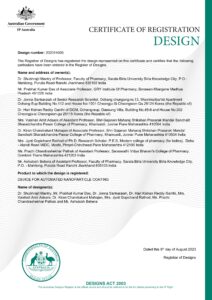
A design registration protects the visual appearance of a product. Not how it works (that’s a patent), but how it looks. Shape, configuration, pattern, ornamentation, or any combination of these applied to an article by an industrial process qualifies, as long as it’s new and original.
Design protection is often overlooked, especially by startups. But if your product’s look is a selling point (and let’s be honest, it usually is), design registration stops competitors from copying it. At ₹1,000 for individual applicants, it’s one of the cheapest forms of IP protection available.
Documents required:
- Form 1 (Application for Registration of Design)
- Four representations of the design (front, back, side, top views)
- Statement of novelty
- Applicant’s name, address, and nationality
- Priority document (if claiming convention priority)
- Power of Attorney (if filing through agent)
Indian example:
Titan watch case designs
Tata Nano body shape
Apple iPhone designs (India registrations)
Apple has registered dozens of product designs in India through the Design Wing, covering the iPhone body shape, the iPad silhouette, and even the MagSafe charger form. These registrations exist independently of Apple’s patents and trademarks. They protect specifically against visual copying of the product’s appearance.
Type 5
Geographical Indications (GI)
A Geographical Indication is a sign used on products that have a specific geographical origin and possess qualities or a reputation linked to that place. Darjeeling tea, for instance, can only be called “Darjeeling” if it’s grown in the Darjeeling region. Same goes for Basmati rice, Kanchipuram silk, and Tirupati laddu.
India has been aggressive about GI registrations. As of 2025-26, the country has 822 registered GIs, with 125 new tags granted in the last financial year alone. Madhya Pradesh led with 26 new GIs, followed by West Bengal with 24.
Documents required:
- Form GI-1 (Application for Registration)
- Statement of case (history, reputation, geographical area)
- Map of the geographical territory
- Details of special qualities linked to the region
- Proof of origin and production process
- Affidavit supporting the application
Indian example:
Darjeeling Tea (India’s first GI, 2004)
Basmati Rice
Tirupati Laddu
Banglar Nolen Gur (2025)
Darjeeling Tea was the first product to receive a GI tag in India. The Tea Board of India holds both the GI and the trademark, and has actively enforced them globally. In 2025-26, newer entries like Banglar Nolen Gur (Bengal’s date palm jaggery) and Khajuraho Stone Craft show that GI protection is expanding well beyond food and textiles.
Type 6
Trade Secrets
A trade secret is confidential business information that gives you a competitive edge. Unlike every other IPR on this list, trade secrets don’t require registration. In fact, they stop being trade secrets the moment you register or disclose them.
India doesn’t have a standalone trade secret statute. Protection comes from the Indian Contract Act, 1872 (through non-disclosure and confidentiality agreements), principles of equity, and the Information Technology Act, 2000 (for digital information theft). Courts have consistently enforced trade secret protection through injunctions and damages.
Protection measures (in place of documents):
- Non-Disclosure Agreements (NDAs) with employees, vendors, partners
- Confidentiality clauses in employment contracts
- Access controls (physical and digital)
- Trade secret identification and classification records
- Employee exit protocols and non-compete clauses
- IT security measures (encryption, access logs)
Indian example:
MDH Masala spice blends
Coca-Cola formula (global)
Tech company algorithms
Here’s the trade secret vs patent dilemma in practice: Coca-Cola’s formula has been a trade secret for over 130 years. If they’d patented it, the formula would have been public after 20 years. By keeping it secret, the protection is indefinite. Indian companies like MDH Masala apply the same logic to their spice blend recipes. The risk? If someone independently discovers or reverse-engineers the secret, you have no recourse.
Type 7
Plant Variety Protection
The Protection of Plant Varieties and Farmers’ Rights Act, 2001 (PPV&FR Act) fills the gap between patents and open-source agriculture. It gives breeders exclusive rights over new, extant, and farmers’ varieties of plants, while simultaneously protecting farmers’ rights to save, use, sow, re-sow, exchange, and sell seeds of protected varieties in unbranded form.
This dual protection system is unique to India. Most countries follow either the UPOV model (breeder-heavy) or leave plant varieties entirely to patents. India created a middle path that recognises both the breeder who develops a variety and the farming community that has conserved genetic resources for centuries.
Documents required:
- Application form (as prescribed by PPV&FR Authority)
- Passport data of the variety (pedigree, parentage, breeding history)
- Photographs/images of the plant variety
- Seed/propagating material sample
- DUS test results (Distinctiveness, Uniformity, Stability)
- Declaration of origin and farmers’ rights acknowledgement
Indian example:
Pusa Basmati 1121 (IARI)
Sahbhagi Dhan (drought-tolerant rice)
Farmers’ varieties from tribal communities
Pusa Basmati 1121, developed by the Indian Agricultural Research Institute (IARI), is one of India’s most commercially successful registered plant varieties. It transformed basmati rice exports. The variety was registered under the PPV&FR Act, giving IARI breeder rights while farmers continue to save and re-sow the seeds without restriction.
One Brand, Seven Protections: How IPR Works Together
IPR types don’t exist in isolation. A successful product often uses several types simultaneously. Here’s how it plays out for a real-world Indian brand.
Case Study: Paper Boat (Hector Beverages)
Paper Boat makes traditional Indian drinks like aam panna, jaljeera, and kokum. As a brand, it touches almost every type of IPR:
“Paper Boat” word mark and the paper boat logo, registered across multiple classes for beverages and merchandise.
The nostalgic illustrations on their packaging and their marketing campaigns are original artistic works protected by copyright.
The distinctive flexible pouch packaging (the pillow-shaped pack with the straw) is a registered design protecting its visual form.
Beverage processing methods and shelf-stable formulations for traditional drinks can be patented (specific manufacturing processes).
The exact recipes and flavour formulations for each drink are kept confidential. These are protected through NDAs and internal access controls.
While Paper Boat itself isn’t a GI product, they source ingredients from GI-tagged regions (mangoes for aam panna, kokum from Konkan).
This isn’t hypothetical. Any consumer brand with a distinctive product, packaging, and marketing touches at least 4-5 IPR types. The question isn’t whether IP protection applies to your business. It’s which combinations you need.
Which IPR Do You Need? Interactive Selection Guide
Check every statement that applies to your situation. The guide will show you which types of IPR protection are relevant to what you’ve created.
Your Recommended IPR Types
Which IPR Is Right for Your Business?
The answer depends on what stage you’re at and what you’re trying to protect. Here’s a quick decision framework:
Just starting out (pre-revenue startup)
Start with a trademark for your brand name. It’s the cheapest long-term protection and prevents someone else from registering your name while you’re still building. If you have a working invention, file a provisional patent to lock in your priority date (you’ll get 12 months to file the complete specification). Put NDAs in place for anyone who sees your idea.
Launching a product
Now you need the full package: complete patent specification (if your invention qualifies), design registration (if the product’s look is distinctive), and trademark registration across the classes you’re selling in. Register copyrights for your marketing materials and website content.
Scaling and exporting
Think about international protection. PCT filing for patents gives you 30 months to enter individual countries. Madrid Protocol for trademarks covers multiple jurisdictions through one application. If your product is region-specific, explore GI registration. Formalise trade secret protocols as your team grows.
Research institution or university
Your primary outputs are patents (for inventions), copyrights (for publications and courseware), and possibly plant variety protection (for agricultural research). Set up an IP policy and an IP cell to handle disclosures and filings systematically. Remember, IPR filings directly impact NIRF and NAAC rankings.
Frequently Asked Questions
What are the 7 types of intellectual property rights in India?
Which IPR lasts the longest?
Is registration mandatory for all types of IPR in India?
Can one product have multiple types of IPR protection?
What’s the difference between a patent and a copyright?
How much does it cost to register different types of IPR in India?
Not Sure Which IPR You Need?
Lexgin handles all seven types of intellectual property. We’ll audit what you have, identify what needs protecting, and handle the filing end-to-end. 1,500+ IPRs filed. 50+ universities served.
Disclaimer: This article is for informational purposes and does not constitute legal advice. IP laws and government fees are subject to change. Contact Lexgin for advice specific to your situation.