Patent Registration Procedure in India


Acquiring a patent in India entails a number of processes, which are provided under the Patents Act of 1970 and the Patents Rules of 2003. These processes have different roles in making sure that an innovation is brought from ideation to patenting. In this article, we are going to explore each one of them.
Stage 1: Patentability Search
The patentability search is a systematic examination of the available and published patent, patent applications, scientific journals, or any other public material that goes by the term ‘prior art’ to determine if the invention will fulfill the criteria to become eligible for being patented.
Why Is This Important?
The patentability search is helpful in determining if there are any other inventions which might restrict the granting of a patent. The search assists the inventor to narrow down their claims, foresee possible objections that may arise during patent examination, and make an educated decision about whether they should pursue their case further. Performing this task prior to writing will lead to a better patent specification.
Is It Required?
No. Performing this process is entirely voluntary; the Indian Patent Office does not impose any such compulsion upon its inventors before allowing them to proceed with the filing process. A common practice among many inventors includes submitting their provisional patent applications initially and then conducting the search later within the one-year time frame.
Stage 2: Patent Drafting
Drafting patents is considered the most crucial step during the process. This is because a patent specification is a techno-legal document in which one is required to sufficiently describe the invention and outline its legal coverage through claims.
Components of Patent Specification
Title of Invention – Brief description defining the invention
Field of Invention – Technical field that relates to the invention.
Background of Invention – Describes the problem that the invention attempts to solve and limitations associated with the solution.
Summary of Invention – Describes the nature of the solution that is intended to resolve the defined problem.
Detailed Description – Sufficient description of the invention together with illustrations where applicable
Claims – They represent the core of the patent. Claims describe the scope of protection that the inventor seeks.
Abstract – Short summary of the document for indexing
Difference between Provisional and Complete Specification
Where one is not ready with all the information required to describe an invention at the filing date, he can file a provisional patent specifying. This type of patent lacks claims while the complete specification includes detailed description and claims. It should be noted that a complete specification should be filed within twelve months
Stage 3: Patent Filing
Once the specification is drafted and finalised, the application is made to the Indian Patent Office. India has four patent offices – at Chennai, Delhi, Kolkata, and Mumbai. The concerned patent office depends on the jurisdiction of the applicant.
Who May File for a Patent?
- The inventor or the inventor’s assignee and legal representative can file the application. Joint inventors can file jointly. In reality, many employees have assigned their rights to the inventor before making any application in their employer’s name. Patents may be filed by any individual or startup or even an entity.
Key Forms at Filing
- Form 1 – Application for grant of patent
- Form 2 – Provisional or complete specification
- Form 3 – Statement and undertaking regarding foreign patent application (if filed elsewhere)
- Form 5 – Declaration of inventorship
- Priority document – Mandatory when claiming convention priority from a foreign application
- NBA approval – Must if invention relates to bio-resources from India
Patent Applications Types
Ordinary Application – The normal form of application without a claim to priority based on another application.
Convention Application – Filed within 12 months after the filing of a similar application in any convention country and claiming the earlier filing date as priority date.
PCT National Phase Application – International application coming into the Indian national phase stage under the Patent Cooperation Treaty.
Divisional Application – Filing of application to split up a pending application which contains more than one invention.
Application of Addition – Filed for additions to the already granted patent.
An application number is allocated upon acceptance of filing and fee payments at the patent office.
Stage 4: International Filing
The patent application made in India will be an Indian application and will be restricted to that alone; however, if a person desires to file the same in other countries as well, there must be international applications made separately. This should ideally take place within 12 months of the initial patent filing in India.
International Filings
PCT Filings (Patent Cooperation Treaty) – Filing a single international application with WIPO allows the applicant 30-31 months from the priority date for filing in various member countries. The PCT filing is the more common international filing route.
Paris Convention Filings – Filing directly in each country within 12 months of filing in India. These applications use the Indian patent application filing date as priority.
Utility Models – Filing in selected countries like Germany and Japan wherein the application process takes much less time. Utility models cover certain types of inventions.
International patent filings involve considerably more costs as compared to domestic filings. It is recommended that one consults a patent lawyer about his international filing plans at an early stage, preferably during the initial filing itself.
Stage 5: Publication
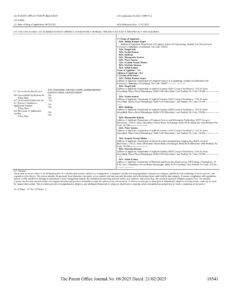
The publication of all applications made to the Indian Patent Office occurs in the Official Journal of Patents after 18 months from the earliest priority date or the filing date, whichever is earlier. The publication process is automated; there is nothing for the applicants to do.
Effects of Publication
Since the date of publication, the rights of the applicant against the third parties become available. This implies that while the patent has not yet been granted, the applicant is legally allowed to sue for infringement if the patent is finally granted.
Early Publication
Any applicant, wishing to publish his/her application prior to 18 months, can file a request for early publication. Early publication allows the applicant to exercise their rights immediately or to commence examination proceedings.
Pre-Grant Opposition
When an application gets published, anyone can file a representation against the grant of patent as per Section 25(1) of the Patents Act. Such an opposition is termed pre-grant opposition. Reasons for opposition could include lack of novelty, obviousness, lack of patentable subject matter, and other reasons stated under the Patents Act.
Stage 6: Request for Examination
Filing of a patent application will not necessarily result in the initiation of the process of examination; an application for examination known as Request for Examination (RFE) needs to be independently filed at the Patent Office. If this application is not submitted within 31 months of the priority date or filing date (whichever is earlier), then the application will be considered withdrawn.
Expedited Examination
Some classes of applicants can opt for an expedited examination process, resulting in substantial reduction in waiting times. Such applicants would include startups, small entities, women applicants (either sole or as first-named inventors), government undertakings, and those applying under PPH and those having received examination results from foreign offices.
Stage 7: Examination
After submission of Request for Examination, the next step is appointment of a Patent Examiner who examines the invention to see that all the criteria of patentability which are laid down in the Patents Act, 1970 have been satisfied.
Patentability Criteria
Novelty – As per Section 2(1)(l), the invention should not be publicly known in any country before the date of filing.
Inventive Step – As per Section 2(1)(ja), the invention must not be an obvious solution for a person with expertise in that particular field.
Industrial Application – Under Section 2(1)(ac), the invention must be useful enough to be manufactured or used industrially.
Subject Matter not covered by patents – The invention must not be among those mentioned under Section 3 and 4 of Patents Act, 1970 (discoveries, algorithms, methods of doing business, computer programs per se, literary works, methods of treatment, and inventions against morality or public order).
First Examination Report (FER)
The Examiner files a First Examination Report (FER) listing all the objections that arise against the grant of a patent. Such objections may be on prior art questioning the novelty and inventive step, Section 3/4 objections, or objections to the technical details of the specification or claim(s).
Stage 8: Grant of Patent
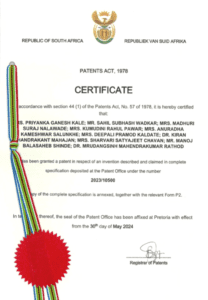
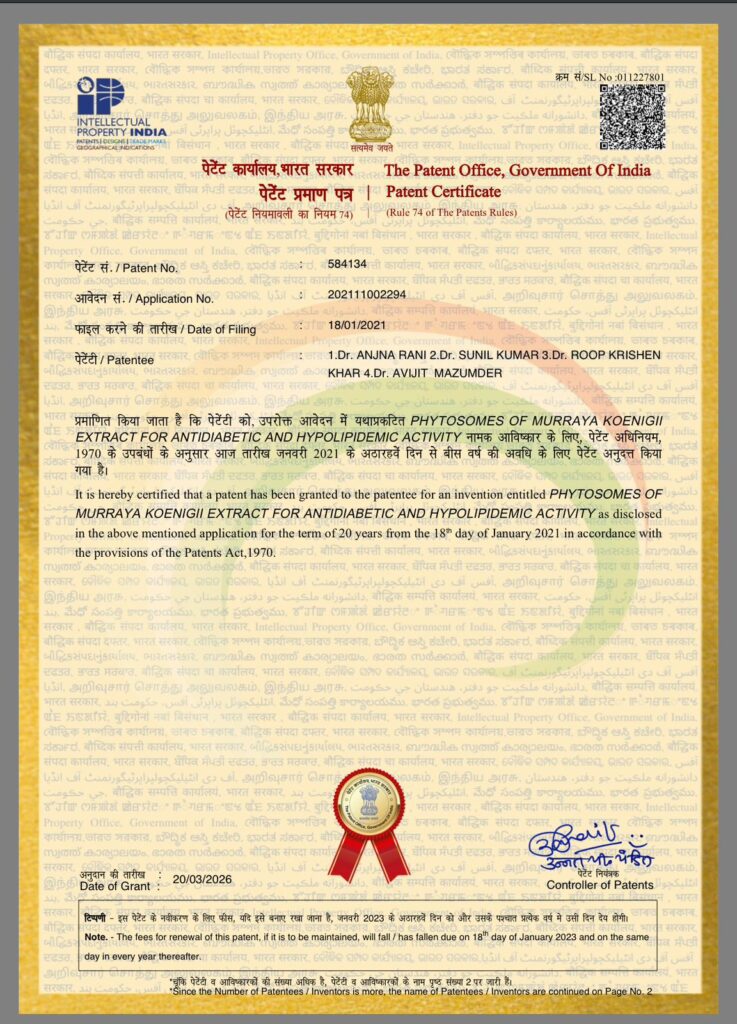
However, in the event that the Controller of Patents is satisfied that all requirements with regard to the patentability of the invention are met and the problems have also been sorted out, the patent is issued. Thereafter, the issuance of the patent will be notified in the Official Gazette of the Patent Journal, and simultaneously, the patentee will also be issued a patent certificate. Now the patent number will be allotted.
In case the Controller considers that the conditions related to granting of patent are not fulfilled even after the hearing and replies from the applicant, then the patent application will be rejected. Such decisions can be challenged in the IPAB or High Court.
Final decision: Once the application for patent has been scrutinized by the patent office, they will come up with a final decision regarding the grant of the patent.
Stage 9: Post-Grant Opposition
An interested party may file a post-grant opposition against the grant of the patent within a period of 12 months from the date of publication of the grant of a patent under Section 25(2) of the Patents Act. A post-grant opposition proceeding is a more formal proceeding compared to pre-grant representation. In the post-grant opposition, the decision will be rendered by the Opposition Board. Post-grant oppositions are also based on the same grounds as pre-grant oppositions: prior publication, prior claim, anticipation, obviousness, and non-patentable subject matter.
One can also challenge a patent by filing for its revocation through the Intellectual Property Appellate Board at any time during the lifetime of the patent. Furthermore, a patent that has been granted can also be declared invalid by the High Court in a patent infringement suit where validity of the patent is put forward as a defence.
Stage 10: Patent Renewal
The patent period in India for which the patent is valid after grant is twenty years from the date of filing of the complete specification of the patent application.
The renewal fees should be paid annually throughout the period of validity of the patent in order to maintain it.
The payment of renewal fees starts from the third year. The payment should be done in advance; otherwise, the patent will lapse if renewal fees are not paid in the entire period of validity of the patent.
Typical Timeline at a Glance
- Date of filing – Application number allotted
- 12 months from provisional application filing – Complete specification filing deadline
- 12 months from filing – Deadline to make PCT/International/Convention filing
- 18 months from priority date – Publication in Official Patent Journal becomes automatic
- 31 months from priority date – Deadline to make Request for Examination
- After RFE – FER issued; deadline to reply to FER 6 months from FER date
- Post-hearing – Deadline to reply to hearing decision 15 days from hearing date
- Examination process should be concluded within 9 months from RFE
- Patent granted – Patent certificate issuance; deadline to oppose patent 12 months from grant date
- Year 3 from filing date or 3 months from filing date whichever is earlier – Patent maintenance renewal fees due
- 20 years from filing – Expiry of maximum patent term
- It is compulsory on clients’ part to track the above deadlines.
Get Expert Help with Your Patent
We provide a full range of patent services from patent search and drafting to filing for patents. Our firm files more than 1,500 IPRs each year, and our processing time is 60% faster than that of the average competitor.