Common Copyright Mistakes Designers Make (And How to Avoid Them)


Designers live and breathe creativity, but creativity without copyright awareness is a lawsuit waiting to happen. From a borrowed font to a Google-searched image dropped straight into a client deck, the design world is littered with well-intentioned mistakes that carry serious legal and financial consequences. Copyright law is not designed to stifle creativity; it exists to protect it. Understanding where the boundaries lie is not just a legal necessity; it is a professional one.
01 Using Images Found on Google
This is perhaps the single most widespread mistake in the industry. Designers, especially those new to the field, treat Google Images like a free stock library. The reality is that virtually every image indexed by Google is protected by copyright the moment it is created. The photographer or illustrator owns those rights automatically, and appearing on a search results page grants you zero permission to use it.
The fix is straightforward: use properly licensed image sources. Free options like Unsplash, Pexels, and Pixabay offer high-quality photos under licenses that permit commercial use. If the budget allows, subscriptions to platforms like Adobe Stock or Getty Images provide access to vast libraries with clearly defined usage rights. When in doubt, always read the licence — even “free” images can carry restrictions on commercial use, attribution requirements, or limitations on modifications.
02 Assuming “Free Fonts” Are Free for Everything
Font licensing is one of the most misunderstood areas of design copyright. A font downloaded for free from a personal project does not automatically become available for a commercial client campaign. Many free fonts carry personal-use-only licenses, meaning the moment you invoice a client, you may be in violation of the terms.
Even paid fonts come with nuances. A desktop licence typically covers print use, but deploying the same font on a website may require a separate web licence. Embedding it in an app? That often calls for yet another licence tier. Always read the End User License Agreement (EULA) before using a font on any commercial project and keep records of your purchases in case you are ever asked to prove compliance.
“Licensing is not a formality. It is the agreement that defines the legal relationship between creator and user ignore it at your peril.”
03 Reproducing Brand Assets Without Permission
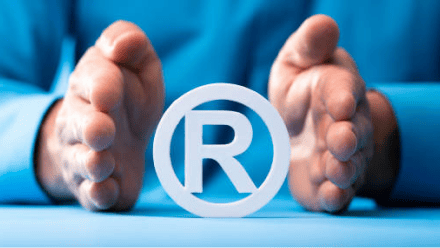
Redesigning a logo for a portfolio concept, mocking up a product for a case study, or using a brand’s assets in a social media post without authorisation are all activities that can expose you to legal action. Brand assets – logos, product imagery, proprietary colour systems, mascots – are protected by both copyright and trademark law.
The best practice is to obtain written permission before including any third-party brand material in your work, even in a non-commercial context. For portfolio mockups, clearly label work as unofficial or conceptual. Many designers use freely available brand guidelines as a reference but stop short of reproducing protected assets verbatim. When working directly with a brand as a client, ensure your contract specifies exactly which assets you are licensed to use and in what contexts.
04 Misunderstanding “Fair Use”
Fair use — or fair dealing in many countries outside the United States — is one of the most misapplied concepts in creative work. Many designers invoke it as a blanket justification for using copyrighted material, believing that transforming or referencing an image or piece of music makes the use automatically lawful. That is a dangerous oversimplification.
Fair use is a legal defence, not a right, and it is determined on a case-by-case basis by courts weighing multiple factors: the purpose of the use (commercial versus educational), the nature of the original work, how much was used, and whether the use could harm the market for the original work. A design agency producing commercial work for a paying client occupies very different legal territory from a student creating editorial illustrations for a class project. When in doubt, license it fair use defences are expensive to argue even when you win.
05 Not Securing a Written Work-for-Hire Agreement
Here is a mistake that trips up even experienced designers: assuming that because a client paid for a design, the client automatically owns it. Under copyright law in most jurisdictions, the creator owns the work they produce unless there is a written agreement that transfers those rights. Without a contract specifying work-for-hire terms or an assignment of copyright, a client who paid thousands for a logo may not legally own it.
This cuts both ways. Designers who do not clarify ownership upfront may find clients using work in ways they never intended or in perpetuity without additional compensation. Always include explicit intellectual property clauses in your contracts. Define what is being transferred, what rights you retain, and under what circumstances. A clear contract protects both parties and prevents expensive disputes down the line.
06 Reusing Your Own Client Work
Once you hand over a final design, especially under a work-for-hire agreement — that work likely belongs to your client, not to you. Reusing visual elements, colour palettes, illustrations, or even structural layouts from a client project in subsequent work for other clients could constitute copyright infringement, breach of contract, or both.
Many designers build up a mental library of solutions that worked well and unconsciously recycle them. The professional remedy is to retain only generic design principles and skills, not client-specific creative output. If you want to display client work in your portfolio, ensure your contract explicitly grants you the right to do so this is not always a given, particularly in industries handling sensitive or proprietary information.
07 Ignoring International Copyright Differences
Working with global clients or distributing work internationally? Copyright law is not uniform across borders. A licence that covers use in the United States may not extend to Europe, Asia, or beyond. Stock image licences, for instance, often specify geographic restrictions. Font licenses may similarly be limited to certain territories.
The safest approach when working across borders is to use rights-cleared assets with worldwide, royalty-free licensing and to ensure your contracts specify the jurisdictions in which the work may be used. Brief your clients on these limitations early in a project – discovering geographic restrictions after a campaign launches is far more disruptive than addressing them during planning.
The Bottom Line
Copyright compliance is not an obstacle to creativity — it is the foundation that makes a sustainable creative career possible. Every image you license, every font EULA you read, and every contract clause you clarify protects not just your clients but also your own work, reputation, and livelihood. Build these habits early, revisit them often, and when the situation is complex, do not hesitate to involve a qualified intellectual property professional. Good design is built on more than aesthetics — it is built on integrity.