What Can and Cannot Be Copyrighted in India?

If you create music, write software, shoot films, design graphics, or publish content online, you have probably wondered whether the law protects your work. Under the Copyright Act, 1957, India offers strong copyright protection to creators, but not everything qualifies. Knowing where the line falls can save you from costly disputes and help you secure your intellectual property rights early.
What Is Copyright in India?
Copyright is a legal right that gives creators control over how their original work is used, copied, distributed, adapted, and communicated to the public. Indian law protects the expression of an idea, not the idea itself. This is known as the idea-expression dichotomy, and it sits at the heart of every copyright question.
Copyright arises automatically the moment an original work is created. India is also a member of the Berne Convention, so works from other member countries receive protection here as well.
What Can Be Copyrighted in India?
Section 13 of the Copyright Act lists the categories of work eligible for protection.
1. Original literary works. Books, articles, poems, blog posts, research papers, and scripts qualify. Computer programs and software source code are also treated as literary works.
2. Original dramatic works. Plays, screenplays, choreography, and scenarios for performance are protected.
3. Original musical works. Musical compositions and notation are covered. The lyrics, however, are protected separately as literary works.
4. Original artistic works. Paintings, drawings, sculptures, photographs, logos, illustrations, and architectural designs fall here. A well-developed cartoon or fictional character can also be protected as an artistic work.
5. Cinematograph films. This covers movies, web series, documentaries, and videos, including the visual recording and the sounds accompanying it.
6. Sound recordings. Songs, podcasts, and audio recordings are protected independently of the underlying music or text.
To qualify, a work must be original, meaning it comes from the author’s own skill, labour, and judgment and is not copied from another source. Courts in India do not demand novelty or high artistic merit, only a modicum of creativity.
What Cannot Be Copyrighted in India?
Many people assume copyright is a catch-all shield. It is not. The following are generally excluded.
Ideas, concepts, and methods. You cannot copyright a business idea, a story concept, a scientific theory, or a method of doing something. If two writers independently express the same idea in different words, neither infringes the other.
Facts and data. Raw facts, news events, and historical data are free for all to use. A compilation or database may be protected if its selection and arrangement show creativity, but the underlying facts remain free.
Names, titles, and short phrases. Book titles, business names, slogans, and catchphrases usually fail the originality test for copyright. These are better protected through trademark registration.
Algorithms and functionality. While the source code of software is protected, the underlying algorithm, logic, or function is not. Inventions of that kind may be eligible for patent protection instead, subject to Indian patent law.
Works lacking originality. Content copied wholesale from another source, or produced with no creative input, does not qualify. Simple lists, common symbols, and standard forms generally fall in this category.
Industrial designs beyond a limit. Under Section 15, if an artistic work is capable of registration under the Designs Act, 2000 and is reproduced industrially more than 50 times, copyright in it ceases. Product designers should consider design registration from the start.
Who Owns the Copyright?
Generally, the author is the first owner. There are important exceptions under Section 17. A work created in the course of employment usually belongs to the employer, unless the contract says otherwise. Commissioned photographs, portraits, and films may belong to the person who commissioned them. For freelancers and agencies, a clear written agreement on ownership is essential.
How Long Does Copyright Last?
For literary, dramatic, musical, and artistic works, protection lasts for the author’s lifetime plus 60 years after death. For cinematograph films, sound recordings, photographs, and anonymous works, the term is 60 years from the date of publication.
Is Copyright Registration Mandatory in India?
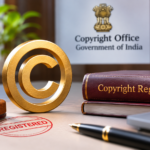
No. Protection exists automatically upon creation. However, copyright registration with the Copyright Office offers significant advantages. The certificate serves as prima facie evidence of ownership, strengthens your hand in copyright infringement cases, and makes licensing, assignment, and enforcement much smoother. Courts and enforcement agencies take registered works more seriously, so registering is strongly advisable.
Exceptions: Fair Dealing and Moral Rights
Section 52 permits fair dealing for purposes such as private study, research, criticism, review, news reporting, and education. Using a work this way is not infringement. The author’s moral rights under Section 57, including the right to claim authorship and object to distortion, also continue even after the economic rights are transferred.
Penalties for Copyright Infringement
Infringement can lead to civil remedies such as injunctions, damages, and account of profits, as well as criminal penalties including imprisonment and fines under Section 63. Acting quickly, with proper documentation, makes a real difference.
Protect Your Creative Work with Lexgin
Whether you are an author, startup founder, filmmaker, or software developer, understanding the limits of copyright is the first step toward protecting your creations. At Lexgin, our intellectual property team helps you with copyright registration, licensing agreements, ownership structuring, and enforcement against infringers.
Reach out to Lexgin today to safeguard what you create.